
Threshold Insights
What Relocating Professionals Should Know Before Choosing a Greater Nashville Community
Relocation is about more than finding the right home. It’s about choosing the community that supports the life you want to build.
- Published by
- Published by Leslie WilsonThreshold Real Estate
- Category
- Relocation
- Estimated read time
- Approximately 9 minutes
By Leslie Wilson | Threshold Real Estate
Before you start looking at homes, choose how you want to live.
One of the advantages of relocating several times for executive roles—and living in five different states—is that I’ve experienced relocation from both sides of the table.
I’ve been the person trying to evaluate unfamiliar communities while balancing a demanding career, tight deadlines, temporary housing, and the pressure of making a good decision quickly.
I’ve also had the benefit of looking back years later and recognizing which decisions mattered most—and which ones, surprisingly, mattered very little.
Most people begin a relocation by searching for homes.
I think that’s backwards.
The house is important, but it’s only one piece of a much larger decision.
The better place to begin is by asking a different question:
What does everyday life need to look like for this move to feel successful?
The answer is different for every client.
For one family, success means being fifteen minutes from the office because time at home with young children is their highest priority.
For another, it means having more land, more privacy, and a slower pace—even if that requires a longer commute.
For someone else, it means walking to restaurants on a Friday night, being close to the airport, or finding a neighborhood that makes it easy to build a new community after leaving friends and family behind.
None of those priorities are right or wrong.
They’re simply different.
That’s why I believe the first decision isn’t choosing a house.
It’s choosing the life you want that house to support.
Greater Nashville isn’t one market.
One of the biggest surprises for many relocating buyers is discovering that “Nashville” isn’t really one housing market.
It’s a collection of distinct communities, each offering a very different lifestyle.
Someone relocating from another state may assume that living twenty or thirty minutes apart doesn’t make much difference.
In reality, it often changes almost everything about how you’ll experience daily life.
That’s why I spend as much time talking about communities as I do properties.
A beautiful home in the wrong location rarely feels like the right decision for long.
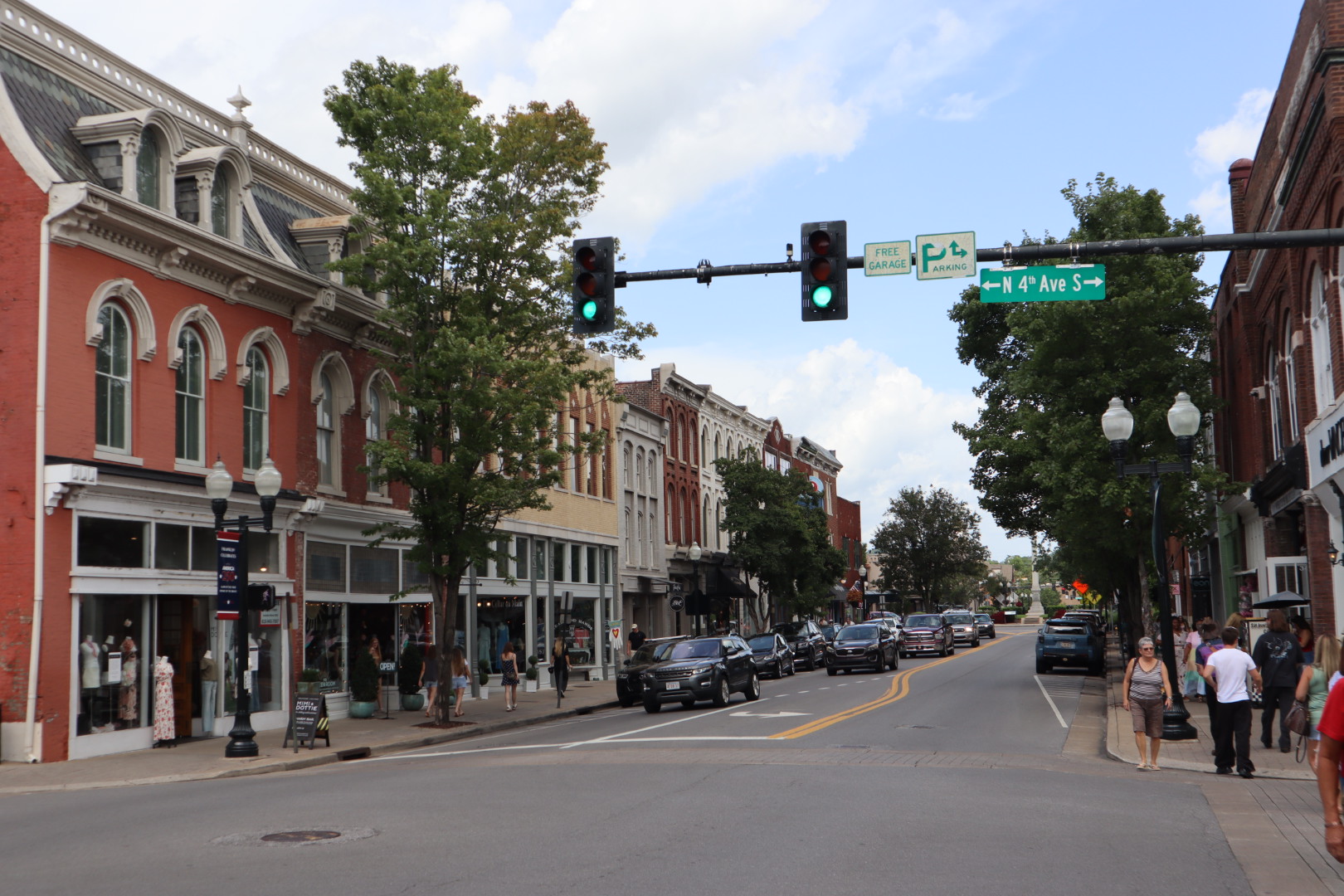
Franklin: Historic charm with modern convenience
Franklin has earned its reputation for good reason.
Its historic downtown, locally owned restaurants, walkable streets, community events, and beautifully preserved architecture create a sense of place that’s increasingly difficult to find.
It’s also one of the reasons many executives relocating from larger metropolitan areas immediately gravitate toward Franklin.
You can enjoy a charming downtown while still having access to major employers, healthcare systems, Nashville International Airport, and everything the region has to offer.
Franklin appeals to buyers looking for more than a home.
They’re often looking for community.
Families appreciate the schools, parks, and recreational opportunities.
Professionals appreciate the balance between career accessibility and quality of life.
Retirees appreciate that it’s easy to remain active and connected.
Luxury buyers appreciate the variety—from historic homes near downtown to gated communities, equestrian properties, golf course neighborhoods, and newer custom homes.
Like every community, Franklin isn’t perfect for everyone.
Homes often command a premium.
Inventory can be competitive.
If your priorities lean toward larger acreage, a shorter commute to downtown Nashville, or maximizing square footage for your budget, another community may ultimately be a better fit.
And that’s exactly the point.
The goal isn’t convincing every buyer to choose Franklin.
The goal is helping you determine whether Franklin supports the life you’re hoping to build.
Brentwood: Established, convenient, and consistently desirable
Brentwood is often one of the first communities relocating executives ask about.
For good reason.
Its location offers convenient access to both downtown Nashville and Franklin, making it attractive for professionals whose work takes them throughout the region.
The community is known for mature landscaping, executive neighborhoods, highly regarded schools, beautiful parks, and long-term residential stability.
Buyers often appreciate that Brentwood feels established.
Neighborhoods tend to have larger trees, generous lot sizes, and a sense of permanence that’s difficult to replicate in rapidly developing areas.
While home prices generally reflect that desirability, many buyers view the combination of location, schools, and long-term market strength as part of the overall value.
Again, whether Brentwood is the right choice depends entirely on what matters most to you.
College Grove, Nolensville and the communities in between
Some buyers quickly discover they’re less interested in walkability and more interested in space.
That’s where communities like College Grove become especially appealing.
- Larger homesites.
- Luxury communities.
- Golf course living.
- Privacy.
- Beautiful countryside.
It’s a different lifestyle.
For others, Nolensville offers an attractive balance between newer neighborhoods, community amenities, convenient commuting, and continued growth.
Communities throughout southern Williamson County continue to evolve, creating opportunities for buyers looking for newer construction while remaining connected to Franklin and Nashville.
One of the conversations I often have with relocating clients is about what “convenience” actually means.
Convenience isn’t just measured by drive time.
It’s measured by how your daily life feels.
- Where you shop.
- Where your children spend time.
- Where you meet friends.
- How often you're in the car.
Those details matter more than most people realize.
Nashville itself offers remarkable variety
When someone tells me they’re moving to Nashville, one of my first questions is:
“Which part?”
- Downtown living.
- Green Hills.
- Belle Meade.
- 12 South.
- Germantown.
- West Meade.
- East Nashville.
Each offers an entirely different experience.
Some buyers want sidewalks, restaurants, and cultural events just outside their front door.
Others prefer quiet residential streets and larger lots.
Neither choice is better.
The important thing is understanding the trade-offs before making a decision.
One of the benefits of spending time exploring different communities—not just touring homes—is that buyers begin to recognize where they naturally feel most comfortable.
That’s often more valuable than any online ranking.
The commute you accept today becomes part of your life tomorrow
When relocating buyers evaluate communities, commute is usually measured in minutes.
I encourage clients to think about it differently.
Instead, ask yourself:
How do I want to spend my time?
Twenty additional minutes each way may not sound significant.
Over the course of a year, however, it can represent hundreds of hours.
Hours spent in traffic instead of having dinner with your family.
Hours not spent exercising.
- Reading.
- Relaxing.
- Attending a child's soccer game.
- Meeting friends.
Commuting is about much more than distance.
- Traffic patterns.
- Hybrid work schedules.
- Airport access.
- Client meetings.
- School drop-offs.
- After-school activities.
All of those deserve thoughtful consideration.
One of the advantages of relocating intentionally is designing your life—not simply accepting it.
School Ratings Are Only Part of the Story
For families relocating with children, schools are understandably one of the first topics that comes up.
Online ratings can be a helpful starting point, but they rarely tell the whole story.
A school district is one piece of a much larger picture.
How long is the drive each morning?
Will your children be able to participate in after-school activities without spending hours in the car?
Does the neighborhood naturally bring families together?
Are there parks, greenways, libraries, sports programs, and community events that fit the lifestyle you’re hoping to create?
Even buyers without children shouldn’t dismiss schools as someone else’s consideration. Strong school districts often contribute to long-term housing demand and can influence future resale value. That doesn’t mean every buyer needs to prioritize the highest-ranked schools. It simply means understanding how schools fit into the overall character of a community is one more piece of making an informed decision.
The goal isn’t finding the “best” school district.
It’s understanding how the community supports the way you and your family want to live.
New Construction or Existing Home?
Middle Tennessee offers an incredible variety of housing options, and one of the biggest decisions relocating buyers face is whether to purchase new construction or an existing home.
There’s no universally correct answer.
New construction offers the appeal of modern floor plans, energy efficiency, updated technology, warranties, and the opportunity to personalize finishes. Many buyers also appreciate knowing they’re the first owners.
Existing homes often provide mature landscaping, established neighborhoods, larger trees, architectural character, and locations that simply aren’t available in newer developments.
Having worked with builders, general contractors, remodeling projects, and new-home construction, I’ve learned that buyers often focus on visible finishes while overlooking the decisions that have a much greater long-term impact.
- Builder reputation.
- Lot orientation.
- Construction quality.
- Drainage.
- Future development surrounding the neighborhood.
- Traffic patterns once the community is fully built.
These are conversations that don’t always happen during a model-home tour, yet they can significantly influence your experience long after closing.
Likewise, older homes deserve thoughtful evaluation beyond cosmetic updates.
A beautifully renovated kitchen may catch your attention, but understanding the condition of major systems, the quality of previous renovations, maintenance history, and future improvement needs often matters far more than new countertops.
Whether you choose new construction or an existing home, the objective isn’t simply finding the most attractive property.
It’s understanding what you’re buying and how that decision supports your long-term goals.
Growth Creates Opportunity—and Questions
One of the reasons so many people are relocating to Middle Tennessee is the region’s continued growth.
- New employers.
- Healthcare expansion.
- Corporate investment.
- Infrastructure improvements.
- New schools.
- Restaurants.
- Retail.
- Parks.
- Trails.
These investments have contributed to a strong quality of life and have made Greater Nashville one of the country’s most desirable places to live.
Growth also brings change.
- Communities evolve.
- Traffic patterns shift.
- New neighborhoods emerge.
- Commercial development expands.
Sometimes those changes create tremendous value.
Sometimes they change the character of an area in ways buyers hadn’t anticipated.
When I’m helping someone relocate, I don’t just look at what’s here today.
I also want to understand what’s planned.
- Are new roads being built?
- Will additional commercial development improve convenience?
- Are there future residential developments nearby?
- What might this area look like five or ten years from now?
None of us can predict the future with certainty.
But asking better questions today often leads to stronger decisions tomorrow.
Mistakes I See Relocating Buyers Make
Every relocation is different, but over the years I’ve noticed a few patterns that come up again and again.
Trying to solve every decision at once
When you’re moving across the country, everything feels urgent.
- House.
- Schools.
- Mortgage.
- Moving company.
- Furniture.
- Utilities.
It’s natural to want every answer immediately.
The best decisions usually happen when we separate those decisions instead of trying to solve them all simultaneously.
Falling in love with a house before understanding the community
Beautiful homes exist in every price range and almost every community.
The harder decision—and often the more important one—is determining whether you’ll enjoy living there every day.
Assuming more house automatically creates more happiness
Larger isn’t always better.
Sometimes a smaller home in the right community creates a much richer quality of life than a larger home that leaves you commuting longer, driving farther, and feeling disconnected.
Relying entirely on online research
Online tools are incredibly valuable.
So are conversations with someone who knows the market, understands the nuances between communities, and can help you interpret what the data doesn’t show.
Numbers provide information.
Experience provides perspective.
Questions Worth Asking Before You Choose a Community
Whenever I’m working with relocating clients, these are some of the questions I encourage them to think about long before writing an offer.
- What does a successful move actually look like for us?
- Which daily routines matter most?
- How important is commute versus space?
- Where do we expect to spend most of our free time?
- If our careers changed in three to five years, would this location still make sense?
- Would we enjoy living here even if the home itself weren't perfect?
- Does this community reflect how we want to spend our ordinary days—not just special occasions?
- If we stayed here for the next decade, would we still feel confident in this decision?
None of these questions can be answered by scrolling through listing photos.
They’re answered through thoughtful conversations, exploring communities, and understanding how different choices support different lifestyles.
The Threshold Perspective
After relocating multiple times for executive roles and living in five different states, there’s one lesson that has stayed with me through every move.
The house is rarely what determines whether a relocation feels successful.
It’s everything that surrounds it.
- The neighborhood where your children make friends.
- The coffee shop where the barista eventually knows your order.
- The route you take home after work.
- The park you walk every evening.
- The neighbors who become part of your life.
Those are the things people remember years later.
- Not the countertops.
- Not the light fixtures.
- Not whether the dining room was two feet larger.
That’s why I believe real estate advice should extend well beyond the transaction itself.
My role isn’t simply to help clients identify properties that meet a list of criteria.
It’s to help them make a decision they’ll feel good about years from now.
Sometimes that means encouraging someone to look at a community they hadn’t considered.
Sometimes it means slowing the process down when everyone else is rushing.
Sometimes it means pointing out a trade-off that isn’t obvious during a showing but becomes very important once everyday life begins.
And sometimes it means confirming that the home someone loves truly is the right choice.
Every relocation is different because every person is different.
- There isn't a formula.
- There isn't a "best" community.
- There isn't one neighborhood that's right for everyone.
There is only the place that best supports the way you want to live.
For me, that’s what thoughtful representation looks like.
Helping people make confident decisions by seeing the bigger picture—not just the next step.
Because long after the boxes are unpacked and the moving truck has driven away, you’re no longer evaluating a real estate transaction.
You’re simply living your life.
And that’s exactly what this decision should support.
A Final Thought
Relocating is one of life’s biggest transitions.
- It's exciting.
- It's challenging.
And at times, it can feel overwhelming.
The good news is that you don’t have to have every answer before you begin.
You simply need a clear process, good information, and someone who understands that buying a home is only one part of creating a successful move.
Having experienced multiple executive relocations myself, I know firsthand how much uncertainty can come with starting over in a new city. I also know that with thoughtful planning and the right guidance, that uncertainty gradually gives way to confidence.
Whether you’re moving across the country, relocating for a new opportunity, or simply considering your options, my hope is that this article helps you ask better questions and make decisions that continue to serve you long after closing day.
Because at the end of the day, success isn’t measured by how quickly you find a house.
It’s measured by how confidently you build your next chapter.
Ready to explore Greater Nashville?
Whether you’re relocating for work, moving closer to family, or simply beginning a new chapter, choosing the right community deserves thoughtful guidance.